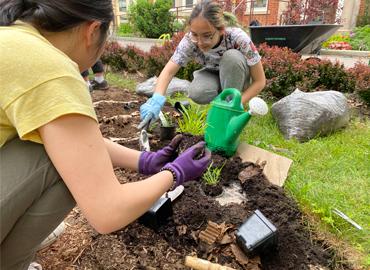

Students from the Research Opportunities Program share their experiences from the field.
Get Hands-On Research Experience
The Research Opportunities Program (ROP) is a second- or third-year course in which you can join an instructor’s research project and earn 0.5 or 1.0 course credit. ROPs take place throughout the academic year.
Undergraduate Research Poster Fair
Students who have completed the Research Opportunities Program will present their research during the Undergraduate Research Poster Fair. The presenters will share insights about their research experience and how they secured their research projects.
ROP/REP program staff will also be onsite to answer any questions about how to apply to these courses. All U of T students, faculty and staff are invited.
- March 11, 2026
- 10:30 a.m. – 2 p.m.
- Hart House, The Great Hall
Schedule
- The Test of Narrative Language in Evaluating Bilingual Immigrant Children’s Narrative Microstructure
Dr. Becky Chen
Ella Zhang, Sophie Jennings
Applied Psychology and Human Development, OISE - An Impact Evaluation of BookSmart and Vroom Tips on Families in South Africa
Dr. Kaja Jasińska
Kaija Taylor
Applied Psychology and Human Development, OISE - The Role of Heritage Language Maintenance on Socio-Emotional Wellbeing: Insights from Syrian and Afghan Refugee Children and Youth
Dr. Kaja Jasińska
Yomna Elshabrawy
Applied Psychology and Human Development, OISE - Investigating the Validity of a Mental Health Screener and Parent-Child Reporting Discrepancies in Rural Côte d’Ivoire
Dr. Kaja Jasińska
Kenda Sinjab
Applied Psychology and Human Development, OISE - Em-POWER-ing the Writer: Examining the Impact of Intervention on Ethical AI Use in Education
Dr. Todd Cunningham
Niki Zirak, Emily Zhang
Applied Psychology and Human Development, OISE - Lipoprotein(a) Triggers Activin Receptor-like Kinase 1 (ALK1)-dependent SMAD1/5 Signaling
Dr. Warren Lee
Sarah Fidora
Biochemistry - The Effects of beta-catenin and APC Downregulation on Anterior-Posterior Polarity in Planarian Regeneration
Dr. Ritu Sarpal
Edlin Liang
Cell and Systems Biology - Identifying an Unknown Karrikin-Like Hormone Signalling Pathway in Arabidopsis
Dr. Shelley Lumba, Jenna Hountalas
Nazenin Sara Akyurekli
Cell and Systems Biology - Quantifying Biogenic (and Bio-anthropogenic) CH4 Emissions from Sewage Grates throughout Toronto and the GTA
Dr. Jennifer Murphy, Dr. Debra Wunch, Dr. Lawson Gillespie
Sofiya Berzhanskaya
Chemistry - Remote Calibration of Low-cost Sensors with National Air Pollution Surveillance (NAPS) Program Data
Dr. Jennifer Murphy, Dr. Debra Wunch, Dr. Mark Panas
Emily Yen
Chemistry - Understanding Urban Methane Sources using Mobile Measurements of Methane and Ethane
Dr. Jennifer Murphy, Dr. Debra Wunch
Nicolas Heer
Chemistry - Low-Cost Sensor CO2 Variability and Time Averaging
Dr. Jennifer Murphy, Dr. Debra Wunch, Mark Panas
Karen Zhu
Chemistry - Ozone Weekend Effect Observable with TAME Low-Cost Sensor Network
Dr. Jennifer Murphy, Dr. Debra Wunch, Mark Panas
Miya Sá
Chemistry - Identifying Nitrous Oxide (N₂O) Hotspots and Quantifying Emissions in the Greater Toronto Area Using Mobile Sensor Data
Dr. Jennifer Murphy, Dr. Debra Wunch, Dr. Sebastien Ars
Stefanos Grigorakis
Chemistry - Rapid Hyperspectral Identification of Sperm Cells in Forensic Samples Using a Variable Multi-spectral LED Array
Dr. Alex Mariakakis
Harpuneet Singh
Computer Science - The Timing of Speciation: Quantifying Reproductive Isolation in C. briggsae hybrids
Dr. Asher Cutter
Margaret Wilde, Adrija Paul
Ecology and Evolution Biology - DNA Quantification and Copy Number Analysis of Circulating Tumor Cells from Breast Cancer
Dr. Susan Done
Elizabeth Chen
Laboratory Medicine and Pathobiology - Understanding Migration and Belief Responses to Climate Change-Driven Flooding and Heatwaves
Dr. Jeffrey Sun
Elizabeth Riddolls, Oceane Yembiline, Shaurya Saxena, Qiujia Jin, Harry Dai
Economics - Predicting and Designing Red Fluorescent Protein Variants Using Machine Learning Models
Dr. Yufeng Zhao
Aksshatt Bariar
Leslie Dan Faculty of Pharmacy - Cause Cake: A 3D Model of Causality
Dr. Samuel Lucas
Callie Zhang
Leadership, Higher and Adult Education, OISE - So What is Causality?
Dr. Samuel Lucas
Sarah Shah
Leadership, Higher and Adult Education, OISE - Transcribing Causality: What does causality look like?
Dr. Samuel Lucas
Nora Kuo
Leadership, Higher and Adult Education, OISE - Vowel Duration in Heritage Hungarian: Is it Slowly Getting Lost?
Dr. Naomi Nagy
Athena Manousakas
Linguistics - N/A
- Spatial Mapping of Vasopressin-expressing Sensory Neurons in the Olfactory System
Dr. Tatsuya Tsukahara
Keren Idel
Molecular Genetics - The Single-Motive Structure of Deontic Action: Medhātithi on Motive, Result, and Deontic Authority
Dr. Elisa Freschi
Ella Lombardi
Philosophy - Precision Wavemeter Using Disorder
Dr. Boris Braverman
Chris Cheng
Physics - BRCA1, DNA Repair, and Metabolism: Insights from Mouse Oocytes
Dr. Andrea Jurisicova
Lavinia Ricca
Physiology - Investigating the Precise Regulation of Neurotransmitter Exocytosis
Dr. Shuzo Sugita
Yuchen Guo
Physiology - Analyzing Pre Synaptic Transmission Defects in C.elegans Genetic Mutant
Dr. Shuzo Sugita
Erica Chu
Physiology - Global and Feature-Based Processing During the Body Inversion Effect in Anorexia Nervosa
Dr. Hayden J. Peel, Joel P. Diaz-Fong, Dr. Jamie D. Feusner
DeeDee Ng
Psychiatry, Division of Neuroscience and Clinical Translation, Temerty - Quantifying Body Dissatisfaction and Actual-Ideal Discrepancy Scores Using a 3D Avatar
Dr. Jamie D. Feusner
Maya Rueda-Cohen
Psychiatry, Division of Neuroscience and Clinical Translation, Temerty - Multimodal Neuroimaging Signatures of Symptom Severity in Body Image Disturbance
Dr. Jamie D. Feusner, Joel P. Diaz-Fong
Sophie P. Williams
Psychiatry, Division of Neuroscience and Clinical Translation, Temerty - Reshaping Self-Identity via Memory Replay: Integrating Schema Learning with a Smartphone-Based Intervention
Dr. Morgan Barense, Aidan Steeves
Gen Kubo, Baran Aghdasi
Psychology - Generational End of History Illusion
Dr. Christina Starman, Alexa Saachi
Shanzeh Omar
Psychology - From Feed to Friendship: Context Matters in Perceptions of Older Adults
Dr. Alison Chasteen
Luxi Wang
Psychology - Language Framing on Prescriptive Expectations of Older Adults with Intersecting Identities in the Workplace
Dr. Alison Chasteen, Dr. Hannah Gans
Irene Guo
Psychology - The Effects of Language Framing on People’s Perceptions of Older Adults in Healthcare
Dr. Alison Chasteen, Dr. Hannah Gans
Hana Yaacoub
Psychology - The Mediating Role of Attention on the Relationship between SES and Memory
Dr. Amy Finn
Sangje Park
Psychology - The Role of Autonomy Supportive Language in Shaping Infant Persistence
Dr. Jessica Sommerville, Grace Sun
Mildred Noronha
Psychology - Are We Stuck in the Past? People's Changing Impressions of Others Across Their Lifespan
Dr. Nicholas Rule, Dr. Arin Korkmaz
Adrian Cheng
Psychology - Perceptual Grouping in Humans and Machines: SAM cannot do contour integration
Dr. Dirk Bernhardt-Walther, Matthias Tangemann
Vennise Ho
Psychology - The Social Cost of Solidarity: Who We Advocate For, Who We Fear to Support, and Why
Dr. Rebecca Neel
Mahika Varma
Psychology - Too Good to Be Your Friend? Investigating the Moral Sweet Spot
Dr. Christina Starmans, Umang Khan
Laura Bittman
Psychology - Green Innovation in the Urban Environment
Dr. Brad Bass
Zijian Li, Rachel Tsai, Lilianna Xing, Natalie Su van Lieshout, Sum Yee Avina Chan, Lilly Haughton, Allin Alya Yasmin
School of the Environment - Funny Face Study
Dr. Hayley Liebenow
Kimberly Lee
Psychology - Moral Development
Dr. Jessica Sommerville
Janeth Aguirre
Psychology - Inhibition of Microglia in the DMS Impacts Goal-Directed Behaviors in a Rat Model of Diet-Induced Obesity
Dr. Laura Corbit
Jayden Tang
Psychology - Assessing the Impact of Unsupervised Clustering for Tinnitus Classification at the Population-Level
Dr. Pascal Tyrrell
Nicolas Wojtarowicz
Statistical Sciences - Uncertainty-Aware Disease Classification in Retinal OCT Imaging
Dr. Pascal Tyrrell
Abigail Chen
Statistical Sciences - Beyond More Labels: Self-Supervised Foundation Models for Rare Disease Detection in Imbalanced Medical Imaging
Dr. Pascal Tyrrell
Navnoor Singh Mahal
Statistical Sciences - Simulating Agent-Based Behaviour in the Environment
Dr. Brad Bass
Xiaotong Shen, Lu Wang, Ching-Yu (Jenny) Hwang
School of the Environment - Simulating complexity in biological and environmental systems
Dr. Brad Bass
Elaine Wang, Jianlin Zhang
School of the Environment - Agent-Based Modeling in Economics: Three Simulations
Dr. Brad Bass
Ishan Datta, Mustafa Qureshi, Will Wang, Vedant Rajgopal Iyer, Samuel Xiong, Mariam Mahmood, Winston Zhu, Hannah Huynh, Tassneem Selman, Oluchi Ibekwe
School of the Environment
- AI-Delivered Psychological Support for Chronic Pain Management: A Directed Qualitative Content Analysis
Dr. Hance Clarke, Dr. Anna Lomanowska, Zhaorong (Karen) Hong
Eileen Liang
Anesthesia and Pain Management, Temerty - Evaluating Solace, an AI Chatbot for Chronic Pain Management: Insights from an Inductive Qualitative Analysis of User Feedback
Dr. Hance Clarke, Dr. Anna Lomanowska, Zhaorong (Karen) Hong
Veronika Kolarska
Anesthesia and Pain Management, Temerty - Investigating Gastrointestinal Symptoms in Hypermobile Ehlers-Danlos Syndrome and Hypermobility Spectrum Disorder Patients
Dr. Hance Clarke, Michelle Vinod, Dr. Dorothy Wong, Jo Carroll
Maya Honda-Granirer
Anesthesia and Pain Management, Temerty - An Investigation on the Association Between Ehlers-Danlos Syndrome/Hypermobility Spectrum Disorder and Respiratory Comorbidities: A Retrospective Cohort Study
Dr. Hance Clarke, Michelle Vinod, Dr. Dorothy Wong, Jo Carroll
Inaya Karmali
Anesthesia and Pain Management, Temerty - Quantum Electronic Behaviour Engineered from the Bottom-Up
Dr. Al-Amin Dhirani, Sean Colford
Canberk Soytekin, Kyra Sommerhalder
Chemistry - Deaminative Fluorination for Radiochemistry Automation
Dr. Chao Zheng
Cynthia Qu
Chemistry - Benchmarking the Prediction of Reaction Selectivities with Computational Chemistry
Dr. Cher-Tian Ser
Jacob Zhu
Chemistry - Quantifying Urban Greenhouse Gas Gradients in Toronto Using Total-Column CO₂, CH₄, and CO
Dr. Debra Wunch, Dr. Jennifer Murphy, Niki Jacobs
Chiara-Marie Marchesano
Chemistry - Financial Literacy Self-Efficacy vs Conceptual Competency among Teacher Candidates
Dr. Alexandre Cavalcante, Deborah Benhamu
Celine Yang
Curriculum, Teaching and Learning, OISE - Mathematics and Financial Literacy Teaching Self-Efficacy in Ontario Pre-Service Teachers
Dr. Alexandre Cavalcante, Deborah Benhamu Encaoua
Helen Wei Jia Chen
Curriculum, Teaching and Learning, OISE - Exploring Financial Literacy and Stock Market Participation of Teacher Candidates
Dr. Alexandre Cavalcante, Deborah Benhamu
Mariana Garcia Mejia
Curriculum, Teaching and Learning, OISE - Economics of Waste: A Study of Waste Management Labour
Dr. Yanyou Chen
Shawn Capper, Xin Gao, Simon Tan
Economics - Chemotherapy-Associated Decline in VO₂ Max and Cardiovascular Implications in Women with Breast Cancer
Dr. Amy Kirkham, Dr. Kerri Scherbinsky
Zoya Khan
Faculty of Kinesiology & Physical Education - Machine Learning-Assisted Fluorescent Protein Engineering
Dr. Yufeng Zhao
Serena Ganbaatar
Leslie Dan Faculty of Pharmacy - Heritage Language Variation and Change: Does English Phonology Influence Heritage Russian Vowels?
Dr. Naomi Nagy, Dr. Hilary Walton
Eliana SanFilippo
Linguistics - Is He a Lion or a Turtle? The Development of Metaphor between Ages 3 and 4
Claudia Raihert, Dr. Myrto Grigoroglou
Meixuan (Mei) Fan
Linguistics - Counterfactual Conditionals Processing in Adults
Lucy Li, Dr. Myrto Grigoroglou
Tsz Kiu Ariel Yeung
Linguistics - From Paper to Online Database: Digital Indipitae
Dr. Andreas Motsch, Dr. Jean-Olivier Richard
Ella Dooling, Kristine Nguyen, Raphaela Kim, Bea Sellen, Tianyi Li
French, Christianity & Culture - Optogenetic Modulation of GABAergic Neurons that Mediate Reward in Mice
Dr. Derek van der Kooy
Frederick Sulowski
Molecular Genetics - Estrogen Signaling Suppresses Gastric Tumorigenesis in Old Female Mice
Dr. Tae-Hee Kim
Krystal Lee Wen Xin
Molecular Genetics - Punishment and Privilege in Manusmriti
Dr. Elisa Freschi
Pranav Chaturvedi
Philosophy - Medhātithi’s Ethics of Response in Manusmṛti’s Law of Violence
Dr. Elisa Freschi
Janhavi Pasricha
Philosophy - Nonreciprocal Optical Cavities
Dr. Boris Braverman
Rajan Roberts
Physics - The Effects of NEMP1 Disruption on Mice Ovarian Reserve in Response to Transposable Element Regulation
Dr. Andrea Jurisicova
Helen He
Physiology - PDSS2 Deficiency in Primordial Oocytes May Trigger Ferroptosis Cell Death
Dr. Andrea Jurisicova
Hanyu Xiong
Physiology - Generation and Functional Characterization of an Immortalized GLP-1R-Expressing Medullary (DVC) Cell Line
Dr. Denise Belsham
Shaden Mehdi
Physiology - Investigating the Role of Purkinje Cells in Motor Impairments of the NALCN p.R1181Q Gain-of-function CLIFAHDD Mouse Model
Dr. Mei Zhen
Anushka Patel
Physiology - Do Age Concealment Methods Affect Young Adults' Evaluations of Older Adults Who Age Conceal?
Dr. Alison Chasteen
Sybil Zhang
Psychology - The Influence of Socioeconomic Status and Age Differences on Perceptual Distortion
Dr. Amy Finn
Serena Ho
Psychology - Investigating the Link Between Self Report Memory Traits and Episodic Memory Performance
Dr. Catalina Yang
Julia Summerfield
Psychology - Perceptual Privilege in Scenes
Dr. Dirk B. Walther
Amber Liu
Psychology - Into the Mind's Eye: Predicting Human Canonical Perspectives with Neural Networks
Dr. Dirk B. Walther
Aerize Conde
Psychology - Reconstructing the Representational Space of Curvature
Dr. Dirk Bernhardt-Walther
Mira Icgoren
Psychology - Ingredients to a Good Life: A Thematic Analysis of First-Person Accounts Examining Life Satisfaction Appraisals
Dr. Felix Cheung, Sofia Panasiuk
Cynthia Lin, Tara Chahine, Choy Tsz Kiu (Natalie)
Psychology - How Does Children’s Moral Reasoning Relate to Their Own Cheating Behaviours?
Dr. Kang Lee
Jasmine Collins
Psychology - Comparing Life Satisfaction Across Groups When People Use Scales Differently
Dr. Felix Cheung
Yulia Miyajima, Clelia de Ferrieres, Lacrecia Kang, Joses Ng
Psychology - Language Comprehension Without Speech: Evidence from a Non-Speaking Autistic Individual
Dr. Emily E. Davis, Dr. Lars Kasper, Dr. Morgan D. Barense
Mohan Yuan
Psychology - The Impact of Ingroup Prejudice on Mental Well-Being Among East Asian International Students
Dr. Rebecca Neel
En-Tzu Chen
Psychology - The Influence of Goal-Directed Locomotion on the Real-World Object Advantage
Dr. Katherine Duncan
Linus Chan
Psychology - Differentiating Noradrenaline and Dopamine in Appetitive Pavlovian Learning
Dr. Laura Corbit
Agnes Chuk
Psychology - Openness to Diversity and Student Adjustment in University Settings
Dr. Odilia Yim
Cindy Qiao, Zoë Kostenas
Psychology - Where Do Men and Women Feel Invisible? How Gender and Environment Relate to Interpersonal Invisibility
Dr. Rebecca Neel
Yu-Tung (Hina) Huang
Psychology - The Effect of Race on Interpersonal Invisibility
Dr. Rebecca Neel
Erica Lucero
Psychology - Predicting Regional Anti-LGBTQ+ Hate Crimes Using Alternative Prejudice Metrics
Dr. Rebecca Neel
Diana Kuznetsova
Psychology - Zero-Sum vs Positive-Sum Mindsets: How Framing Shapes Solidarity Between Cis and Trans Women
Dr. Rebecca Neel
Amanda Dong
Psychology - Decoding Neural Networks: Analyzing Alignment Between CNN Feature Detection and Human Visual Perception
Soehee Han, Dr. Dirk Bernhardt Walther
Napasorn (Pongpang) Kao-ian
Psychology - Mounds & Memory
Dr. Pamela Klassen
Annika Kohli, Teri Mekanak
Religion - Mounds & Memory around the Great Lakes
Dr. Pamela Klassen, Dr. Megan Hull, Sarina Simmons
Grace Blumell, Annika Kohli
Religion - Simulating Emergent Urban Heat Islands in Complexity
Dr. Brad Bass
Zijian Li, Brian Ray-Sean Huang
School of the Environment - Farm-Based Education Strategies for Regenerative Agriculture
Dr. Nicole Spiegelaar, Brandi Bechard
Nicole Stochmal
School of the Environment - Engagement strategies for university campus citizen science
Dr. Nicole Spiegelaar, Dr. Daniel Newman
Nick Amenta
School of the Environment
Benefits of the Research Opportunities Program
- Learn research methods and further develop your research skills
- Strengthen your graduate school applications by developing a close working relationship with a faculty member
- Build peer connections with fellow ROP students as you acquire new knowledge together
- Have an opportunity to share your work at the bi-annual Research Fair — an exciting highlight of the program
Who is Eligible to Participate?
Students are eligible to apply for an ROP if they meet the following criteria:
- Are registered as a full- or part-time student entering their second or third year of an undergraduate degree program within the Faculty of Arts & Science at the St. George campus
- Have accumulated between 4.0-13.5 credits (including transfer credits) by the end of the April exam period
Requirements
- ROP courses are posted on CSM. The timeframe for ROP applications is from mid-February to mid-March every year.
- The ROP program has only one application cycle each year. The 2026-27 ROP application cycle includes Summer 2026, Fall 2026, Fall/Winter 2026-27 and Winter 2027 ROP courses.
- If selected for a ROP course, you will be required to sign an agreement (ROP course contract) with your supervising instructor, which will serve as your course syllabus for your 299 course (if this is your first ROP) or 399 course (if this is your second ROP).
- You may enrol in a maximum of two ROP courses (with different supervisors) during your undergraduate studies.
Is there an Additional Cost?
No, there are no additional fees for ROP courses. ROPs are covered through your regular tuition fees.
ROP Courses
The ROP courses will be posted on the CSM system from February 17 to March 15, 2026. ROP courses are no longer posted on CLNx. Follow the CSM User Guide to learn how to use the system.
| Department | Professor | Research Project |
|---|---|---|
|
APHD |
Becky Xi Chen |
The International Bilingual Education Project |
|
APHD |
Michele Peterson-Badali |
Mental Health in Youth Criminal Court |
|
APHD |
Todd Cunningham |
Exploring Teacher Mental Health Literacy as a Determinant of Mental Health Service Access by Elementary School Children |
|
APHD |
Todd Cunningham |
School Engagement and Performance Among Refugee Youth |
|
APHD |
Earl Woodruff |
Emotions and Learning: Examining affective and cognitive processes in real-time |
|
APHD |
Esther Geva |
Exploring the Literacy Outcomes of a vocabulary and Reading Comprehension Intervention Targeting Immigrant Adolescents |
|
APHD |
Esther Geva |
Developmental, Cognitive and Typological Spelling Error Patterns of English Language Learners Coming from 3 Typologically Different Home Language Backgrounds |
|
AST |
Ting Li |
Revealing the Galaxy Formation and the Nature of Dark Matter with Galactic Archaeology |
|
AST |
Christopher Matzner |
Astrophysical ransients involving stellar interactions with massive black holes |
|
AST |
Christopher Matzner |
Calculating the observational signal of mirror stars with optically thick nuggets |
|
AST |
Joshua Speagle |
Understanding How Galaxies Grow in Cosmological Simulations with Statistics and Machine Learning |
|
AST |
Laurie Rousseau-Nepton |
Study of the most massive star-forming clusters |
|
BCH |
Warren Lee |
LDL transcytosis by coronary endothelial cells and the initiation of atherosclerosis |
|
BCH |
Warren Lee |
Mechanisms of LDL transcytosis across the coronary artery endothelium |
|
BCH |
Warren Lee |
LDL transcytosis by coronary endothelial cells and the initiation of atherosclerosis |
|
CHM |
Andrei Yudin |
Construction of heterocycles using chemodivergent reactions |
|
CHM |
Haissi Cui |
Expression and purification of antibodies |
|
CHM |
Al-Amin Dhirani |
Systems with Quantum Electronic Behaviour Nanoengineered from the bottom-up |
|
CHM |
Al-Amin Dhirani |
Quantum nanoengineered materials |
|
CHM |
Al-Amin Dhirani |
Nanoengineering Quantum Electronic Behaviour |
|
CHM |
Alan Aspuru-Guzik |
Using edge technology such as IoT, Quantum, and machine learning in the self-driving lab to accelerate material discovery. |
|
CHM |
Alan Aspuru-Guzik |
Quantum Algorithms for Scientific Computing |
|
CHM |
Alan Aspuru-Guzik |
Graph representation based on quantum theory of atoms in molecule for machine learning |
|
CHM |
Alan Aspuru-Guzik |
Computational Chemistry for Catalysis |
|
CHM |
Alan Aspuru-Guzik |
Design of high-performance organic laser molecules |
|
CHM |
Alan Aspuru-Guzik |
Efficient Full CI representation of Coupled Cluster wavefunctions |
|
CHM |
Alan Aspuru-Guzik |
Elucidating molecular structure by rotational spectroscopy and deep generative models |
|
CHM |
Andrei Yudin |
Synthetic Half-Reactions for Understanding Chemical Synthesis |
|
CHM |
Haissi Cui |
Visualizing intracellular RNA trafficking |
|
CHM |
Haissi Cui |
Genetic code interpretation in brain disorders |
|
CHM |
R. J. Dwayne Miller |
Toward overcoming the blood-brain barrier using an optical fiber |
|
CHM |
Alan Aspuru-Guzik |
Machine Learning methods for Molecular Aggregate Structure Prediction and Optical Property Correlation |
|
CHM |
Alan Aspuru-Guzik |
Theoretical and data science approaches for understanding the flexibility of metal-organic frameworks |
|
CHM |
Chao Zheng |
Development of Novel 11C- and 18F-Labeled Radiochemistry Methods for PET Imaging |
|
CHM |
Jennifer Murphy, Debra Wunch |
Data Analysis of Air Quality Pollutants and Greenhouse Gases in the Greater Toronto Area |
|
CHM |
M Cynthia Goh |
Continuous disinfection of surfaces by nanomaterials coatings |
|
CHM |
M Cynthia Goh |
Storm pond water: analysis and potential remediation by photocatalysis |
|
CHM |
Alan Aspuru-Guzik |
Synthesis of New Organic Light-Emitting Diode Materials |
|
CHM |
Barbora Morra, Andy Dicks |
CHM - Developing New Microwave-Assisted Organic Synthesis Reactions for Use in the Undergraduate Laboratory Curriculum |
|
CHM |
Helen Tran |
Synthesis of soft tissue-compatible bottlebrush elastomers |
|
CHM |
Helen Tran |
Self-assembly of biomimetic peptoids into 2D nanosheets |
|
CLA |
Jonathan Burgess |
Theories of Myth |
|
CSB |
Sergey Plotnikov |
Mechanisms of cell adhesion signaling |
|
CSB |
Shelley Lumba |
Molecular dialogue between plants and fungi |
|
CSB |
Shelley Lumba |
Intra- and Interkingdom signaling in soil |
|
CSB |
Ritu Sarpal |
Developing a laboratory to study gene expression patterns in Drosophila embryos |
|
CSB |
Ashley Bruce |
Generation of transgenic zebrafish lines using targeted gene editing |
|
CSB |
Shelley Lumba |
Unveiling Hidden Partnerships: Bioinformatic Identification of Bacterial Communities in Fungi |
|
CSB |
Ritu Sarpal |
Planaria experiments for CSB328 laboratory |
|
CSB |
Nicholas Provart |
Molecular and Bioinformatic Characterization of Novel Environmental Stress-Associated Genes from Plants |
|
CSB |
Qian Lin |
Develop a closed-loop virtual reality (VR) system to provide a naturalistic and interactive environment for head-fixed juvenile zebrafish |
|
CSC |
Alan Aspuru-Guzik |
Automating knowledge graph construction using large language models |
|
CSC |
Steven Engels |
Game Design for Forensic Science Education |
|
CSC |
Marsha Chechik |
Testing and analyzing reliability of computer vision models |
|
CSC |
Alan Aspuru-Guzik |
Multimodal interpreter for automated chemical reaction mining |
|
CSC |
Joseph Williams |
Enhancing & Personalizing Technology for Education & Health by Integrating Human-Computer Interaction, Psychology, Statistics & Large Language Models |
|
CSC |
Joseph Williams |
Enhancing & Personalizing Technology for Educational & Physical/Mental Health by integrating Human-Computer Interaction, Psychology & Statistical Machine Learning |
|
CSC |
Alan Aspuru-Guzik |
Automatized implementation of non-unitary embeddings for quantum computers |
|
CSC |
Alan Aspuru-Guzik |
Evaluating and Enhancing LLM’s scientific understanding |
|
CSC |
Alan Aspuru-Guzik |
Quantum Circuits for Fermionic Transformations |
|
CSC |
Alan Aspuru-Guzik |
Robot Manipulation and Robot Learning for Self-Driving Labs |
|
CSC |
Joseph Williams |
Helping Students Improve their Education & Health by Integrating Behavioral/Social Sciences like Psychology, Economics, Public Health with Computer Science |
|
CSC |
Joseph Williams |
Building Intelligent Self-Improving Technology for Student Education & Health by Integrating Machine Learning, Statistics, Economics, Computational Social Science |
|
CSC |
Mario Badr |
Surveying approaches and tools in computer systems education |
|
CSC |
Peter Marbach |
Evaluating Models and Algorithms for Social Networks using Twitter Data |
|
CSC |
Peter Marbach |
Network Protocols for the Internet of Things |
|
CSC |
Peter Marbach |
Understanding the Formation and Structure of Communities in Social Networks |
|
CSC |
Peter Marbach |
Building a Theoretical Foundation for Multi-Agent Reinforcement Learning |
|
ECO |
Jonathan Hall |
How Are New Technologies Affecting Transportation Safety? |
|
ECO |
Jeffrey Sun |
Understanding Migration and Belief Responses to Climate Change-Driven Flooding and Heatwaves |
|
ECO |
Yanyou Chen |
Measuring and Boosting the Productivity of Disabled Workers: The Case of Food-Delivery Workers |
|
EEB |
Asher Cutter |
Genetics and development in nematode evolution |
|
EEB |
Belinda Chang |
Molecular evolution of rhodopsin |
|
EEB |
Stephen Wright |
Coevolution of sex chromosomes and transposable elements |
|
EEB |
Stephen Wright |
EEB - Genomic basis of sex determination in the plant Rumex hastatulus |
|
EEB |
Asher Cutter |
Genetics and development in nematode evolution |
|
EEB |
Chelsea Rochman |
Contamination and Effects of Microplastics in Aquatic Ecosystems |
|
EEB |
Megan Frederickson |
Host-microbe interactions across an island archipelago |
|
EEB |
Jacqueline Sztepanacz |
The evolution of sex differences in wings |
|
EEB |
Benjamin Gilbert |
Ecological selection and drift |
|
ENV |
Brad Bass |
Land Use Economics and Sustainable Planning |
|
ENV |
Brad Bass |
Simulating Complexity, Chaos and Emergence |
|
ENV |
Brad Bass |
Will Internet Connectivity Improve Access to Opportunities |
|
ENV |
Brad Bass |
Simulating the Spread of COVID-19 and the Effectiveness of Preventive Measures with a Fixed Facility, Nigeria |
|
ENV |
Brad Bass |
Simulating the Emergence of Unexpected Change within Natural Systems |
|
ENV |
Brad Bass |
Simulating the emergence of behavioural change and the impact on the environment |
|
ENV |
Brad Bass |
Green Infrastructure Design: Rewilding Urban Areas from the Inside Out |
|
ENV |
Tanhum Yoreh |
Environmental Action in Faith Communities |
|
ENV |
Tanhum Yoreh |
Faith-Based Environmentalism: Mapping and Analysis |
|
ENV |
Brad Bass |
Simulating the Impact of Vegetation on the Urban Heat Island |
|
ENV |
Brad Bass |
Simulating Complexity, Chaos and Emergence |
|
ESS |
Andrei Swidinsky |
Developing a mineral deposit exploration project using legacy data and machine learning |
|
ESS |
Miriam Diamond |
Characterizing lots of microplastics in Toronto outdoor air and surface waters |
|
FRE |
Andreas Motsch, Jean-Olivier Richard |
Digital Humanities: From Paper to Online Database |
|
GGR |
Nidhi Subramanyam |
Planning for urban water security |
|
HIS |
Jennifer Mori |
Early modern English household manuals, 1660-1800 |
|
HIS |
Jennifer Mori |
Song and Story. English Garlands and Songsters of the Eighteenth Century |
|
HMB |
Leanne De Souza-Kenney |
Rising food costs and the effects on underserved/vulnerable communites and their cardio metabolic health outcomes |
|
HMB |
Leanne De Souza |
Hindsight 2020: Post-secondary Insights on Learning in a Pandemic |
|
HMB |
Leanne De Souza |
HMB - Hindsight 2020: Post-secondary Insights on Learning in a Pandemic |
|
HMB |
William Ju |
Developing EDI (Equity, Diversity, Inclusivity) learning modules for biology courses |
|
IMM |
Matthew Buechler |
Computational approaches to characterizing universal fibroblasts |
|
IRE |
Jenna Myers |
Upskilling and Worker Mobility through Bootcamp Training Programs |
|
LDFP |
Yufeng Zhao |
Developing novel protein-based biosensors for biological imaging and diagnostic applications |
|
LIN |
Myrto Grigoroglou |
Events in language and cognition |
|
LIN |
Ivan Bondoc |
Incremental Sentence Processing of Tagalog Flexible Word Order |
|
LIN |
Myrto Grigoroglou |
Events in speech and gesture |
|
LIN |
Myrto Grigoroglou |
Cross-linguistic expression of events in speech and gesture |
|
LIN |
Naomi Nagy |
Heritage Language speakers in Variationist Sociolinguistics |
|
LIN |
Sali Tagliamonte |
Language Detectives of Toronto: Science and Craft |
|
LIN |
Suzi Oliveira de Lima |
Internationalized learning at home: investigating African languages spoken in Toronto |
|
LMP |
Susan Done |
Heterogeneity and the Immune Response in Breast Cancer |
|
LMP |
Kelsie Thu |
Investigating new therapeutic strategies in lung cancer |
|
LMP |
Golnaz Karoubi |
Effects of Biophysical Cues on Airway Epithelium |
|
LMP |
Warren Lee |
Mechanisms of acute lung injury - development of novel therapeutic approaches |
|
LMP |
Kelsie Thu |
Characterizing novel treatment strategies for lung cancer |
|
LMP |
Susan Done |
Heterogeneity and the Immune Response in Breast Cancer |
|
LMP |
Shinichiro Ogawa |
Human Pluripotent Stem Cells for Modelling Human Liver Disease and Cell Therapy |
|
MAT |
George Elliott |
Classification of C*-algebras |
|
MBP |
Daniel De Carvalho |
Genome-wide CRISPR Screen in Primary Human CD8+ T Cells |
|
MGY |
Derek van der Kooy |
"Neurobiology of motivation” and “Neural stem cells” |
|
MGY |
Miguel Ramalho-Santos |
Epigenetic regulation of mammalian development |
|
MGY |
Marc Meneghini |
Discovering pathways of pediatric inflammatory bowel disease through multi-species genetics |
|
MGY |
Aaron Reinke |
Development of large-scale sequence alignment methods for the detection of microsporidian parasites |
|
MGY |
Derek Van Der Kooy |
“Learning and memory genes” and “Neural stem cells” |
|
MGY |
Thomas Hurd |
Determining how deleterious mitochondrial DNA mutations are eliminated |
|
MGY |
Zhenya Ivakine |
Investigating the role of two beta-tubulin isotypes in the biology of the primary cilium |
|
MGY |
Tae-Hee Kim |
Mechanisms of gut stem cell niches |
|
MGY |
John Brumell |
Studies of intracellular bacterial pathogens |
|
MGY |
Marc Meneghini |
Molecular and genetic investigations of viral innate immunity |
|
MGY |
Peter Roy |
Identifying novel nematicides to combat plant parasitic nematodes |
|
MGY |
Peter Roy |
Building and Employing a Novel C. elegans Strain to Use in a Drug Development Pipeline |
|
MGY |
Marc Meneghini |
Discovering pathways of pediatric inflammatory bowel disease through multi-species genetics |
|
NMC |
Mohamad Tavakoli-Targhi |
Iranian Cinema |
|
NMC |
Mohamad Tavakoli-Targhi |
Persian Archives |
|
NMC |
Mohamad Tavakoli-Targhi |
Persianate Women Poets |
|
NMC |
Adrien Zakar |
Instruments of Empire: Histories of Mapping in the Middle East and the World |
|
NMC |
Mohamad Tavakoli-Targhi |
Persianate Women Poets |
|
OISE |
Kang Lee |
Academic Integrity |
|
OISE |
Eunice Jang |
APLUS for University Students' Communication Skill Development |
|
OISE |
Todd Cunningham |
Evaluation of assistive technology for students who have learning difficulties |
|
OISE |
Becky Chen |
Reading Comprehension among Majority and Minority Language Children in French Immersion |
|
OISE |
Esther Geva |
South Asian Immigrant Parents’ Involvement in the Education of Children with Learning Difficulties: Developing and Testing a Cultural Beliefs and Attributions based Intervention Model |
|
OISE |
Eunice Jang |
Diagnostic Assessment of Early Reading and Oral Language Skills |
|
OISE |
Kaja Jasinska |
Impact of interrupted schooling on the development of neural systems for reading in resettled refugee chidlren |
|
OISE |
Kang Lee |
Academic Integrity Study |
|
OISE |
Kang Lee |
Manga Engagement Study |
|
OISE |
Kang Lee |
Machine Learning Applications in Health Assessments |
|
OISE |
Jennifer Jenkins |
The role of pregnancy complications in the association between maternal early adversity and offspring mental health: A mediation meta-analysis |
|
OISE |
Jennifer Jenkins |
Understanding Conceptualization and Operationalization of the Differential Parenting Construct: A Scoping Review |
|
OISE |
Todd Cunningham |
Understanding of Assistive Technology witch School Age Students |
|
OISE |
Eunice Jang |
Leveraging AI for Assessing Children's Language and Literacy Skill Development |
|
OISE |
Kaja Jasinska |
Neurocognitive development, socioemotional wellbeing, and learning |
|
PCL |
Chao Zheng |
Development and application of innovative radiopharmaceuticals for the diagnosis and assessment of treatment in neuropsychiatric and neurodegenerative disorders |
|
PCL |
Amanda Boyle |
Screening novel PET radioligands in xenograft mouse models of gliomas and brain metastases. |
|
PCL |
Roger McIntyre |
Synthesizing the Pathophysiology of Post-COVID-19 Syndrome: A Systematic Review |
|
PHL |
Elisa Freschi |
Deontic concepts in Sanskrit philosophy |
|
PHY |
Boris Braverman |
Optimal filtering of spatial modes of light |
|
PHY |
Boris Braverman |
Precision measurement using disorder |
|
PHY |
Sergio de la Barrera |
Advanced two-dimensional materials assembly and characterization |
|
PHY |
Carolyn Sealfon |
Towards Scalable Assessments of 21st Century Competencies in Physics |
|
PHY |
John Wei |
Exploratory Synthesis of Oxide Superconductors |
|
PHY |
John Wei |
Cryomagnetic Scanning Tunneling Spectroscopy |
|
PHY |
Carolyn Sealfon |
Summarizing learners' free responses at large scales |
|
PHY |
Boris Braverman |
Ultracold atom transport for optical clocks |
|
PHY |
David Curtin |
Electromagnetic Emissions of Mirror Stars with Optically Thick Captured Nuggets |
|
PHY |
John Wei |
Synthesis of Nickel Oxide Superconductors using Extreme Thermodynamics |
|
PHY |
Boris Braverman |
Nonreciprocal Optical Cavities |
|
POL |
Lynette Ong |
Politics & Society in China, Greater China and Southeast Asia |
|
POL |
Julie Moreau |
Queer Conservatism |
|
POL |
Lynette Ong |
Analysis of Socio-political Conditions in China and Beyond |
|
POL |
Donald Kingsbury |
After Extraction: On the Politics of Mine Reclamation in the Americas |
|
POL |
Donald Kingsbury |
Extractive Frontiers of the Post-Carbon Energy Transition |
|
POL |
Donald Kingsbury |
After Extraction: The Politics of Mine Reclamation and Rehabilitation in the Americas |
|
POL |
Peter Loewen |
How do governments respond to COVID-19? A cross-national comparison of policy responses to a pandemic |
|
PSL |
Mei Zhen |
Computational and Operational Principles of an Intact Neural System |
|
PSL |
Shuzo Sugita |
Genetic analysis of synaptic transmission in C. elegans |
|
PSL |
Haibo Zhang |
Machine learning in mechanical ventilation |
|
PSL |
Andrea Jurisicova |
Molecular modulation of reproductive success - from egg to placenta. |
|
PSL |
Denise Belsham |
Regulation of brain neuropeptides by nutrients, chemicals, and hormones. |
|
PSL |
Mei Zhen |
Sodium leak channel NALCN's role in neural circuits and development. |
|
PSL |
Adria Giacca |
The role of NOD1 in obesity-associated diabetes |
|
PSL |
Andrea Jurisicova |
Role of Mitochondria in establishing developmental competence of oocyte. |
|
PSL |
Andrea Jurisicova |
Molecular modulation of reproductive success - from egg to placenta |
|
PSL |
Brian Cox |
Modelling human trophoblast interactions with decidual natural killer cells |
|
PSL |
Brian Cox |
Trophoblast micrRNAs in cellular development |
|
PSL |
Haibo Zhang |
Lung Gegeneration in ARDS |
|
PSL |
Mei Zhen |
Neuronal development by automated electron microscopy |
|
PSL |
Mei Zhen |
Sodium leak channel NALCN's role in neural circuits and development |
|
PSL |
Sheena Josselyn |
Examining the impact of stress on memory in mice |
|
PSL |
Sheena Josselyn |
Understanding memories in mice |
|
PSL |
Haibo Zhang |
Machine learning in mechanical ventilation |
|
PSL |
Haibo Zhang |
Lung Regeneration in ARDS |
|
PSL |
Adria Giacca |
The role of NOD1 in obesity-associated diabetes |
|
PSL |
Shuzo Sugita |
Genetic analysis of synaptic transmission in C. elegans |
|
PSL |
Denise Belsham |
Understanding the role of excess nutrients, endocrine disrupting chemicals, and circadian rhythms in the regulation of neuropeptides that control energy homeostasis and reproduction |
|
PSY |
Kaori Takehara |
Brain circuitry supporting transitive inference |
|
PSY |
Morgan Barense |
Developing technology-based solutions to promote healthy aging |
|
PSY |
Christina Starmans |
Development of Moral and Social Cognition |
|
PSY |
Margaret Mack |
How does creativity develop? |
|
PSY |
Morgan Barense |
How does the brain support memory? |
|
PSY |
Jessica Sommerville |
Investigating Infants’ and Children’s Social, Cognitive, and Moral Development |
|
PSY |
Amy Finn |
Learning in the developing mind and brain |
|
PSY |
Dirk Bernhardt-Walther |
Perception of scenes in the real world and the visual arts |
|
PSY |
William Cunningham |
Social Others |
|
PSY |
Alison Chasteen |
Stereotyping, Prejudice, and Discrimination |
|
PSY |
Laura Corbit |
The neural bases of predictive learning |
|
PSY |
Odilia Yim |
The Role of Language and Identity among Ethnic Minority Individuals |
|
PSY |
Felix Cheung |
The Science of a Good Life |
|
PSY |
Nicholas Rule |
The Science of Snap Judgments |
|
PSY |
Katherine Duncan |
Understanding Human Memory |
|
PSY |
Odilia Yim |
"Allow me to re-introduce myself”: The Role of Language and Identity Integration among Ethnic Minorities |
|
PSY |
Spike Lee |
Politics, Ideology, Morality, Science Denialism, Social Class, and Digital Technology |
|
PSY |
Spike Lee |
Morality, Values, and Intuitions |
|
PSY |
Spike Lee |
Social Class, Social Dominance, Relative Deprivation, and Lay Beliefs |
|
PSY |
Spike Lee |
How Physical Firmness Affects Metacognitive Firmness Leading to Stronger Beliefs, Reinforced Processing Styles and More Entrenched Judgments |
|
PSY |
Spike Lee |
Psychology of Politics, Ideology, Morality, Science Denialism, Conspiracy Theories, and Fake News |
|
PSY |
Christina Starmans |
Children's Understanding of Moral Conflict and Temptation |
|
PSY |
Rebecca Neel |
Prejudice, stigmatization, motivation, and social invisibility |
|
PSY |
Jessica Sommerville |
The developmental origins of children’s thinking and behaviour in the domains of social, cognitive, and moral development |
|
PSY |
Jessica Sommerville |
The infantile origins of social thinking, learning and behavior |
|
PSY |
Alexander Barnett |
Uncovering how the brain forms and retrieves memories |
|
PSY |
Felix Cheung |
The Science of a Satisfying Life |
|
PSY |
Katherine Duncan |
Investigating Episodic Memory in Parkinson's Disease Patients |
|
PSY |
Laura Corbit |
Neural control of reward-related learning |
|
PSY |
Nicholas Rule |
Social Perception and Cognition |
|
PSY |
Suzanne Wood |
Drug Usage Rates and Attitudes Among U of T Students |
|
PSY |
Gillian Einstein |
Estrogens and Cognition - Body Mapping |
|
PSY |
Gillian Einstein |
The relationship between estrogen loss, inflammation, sleep, and brain atrophy |
|
PSY |
Gillian Einstein |
The relationship between sleep, cortical thickness, estrogen, and memory |
|
PSY |
Gillian Einstein |
Estrogens and Cognition - Brain and Cognitive Changes in Women with the Breast Cancer 1 & 2 Mutations |
|
PSY |
Gillian Einstein |
Exploring aging, cognition and brain structure/function in immigrant women from the Horn of Africa |
|
PSY |
Gillian Einstein |
Cognitive Ageing and Long-Term Gender-Affirming Estradiol Treatment |
|
PSY |
Gillian Einstein |
Estrogens and Cognition - Memory and Inflammation |
|
PSY |
Allison Sekuler |
Vision and Aging: perception/cognition links in health aging and dementia |
|
PSY |
Michael Mack |
Exception learning as window to neural memory systems |
|
PSY |
Can Mekik |
Motivation, Emotion, and Meta-Cognition in Cognitive Architectures |
|
PSY |
Margaret Mack |
How does the developing brain remember? |
|
PSY |
Paul Bloom |
Moral Reasoning in Children and Adults |
|
PSY |
Dirk Bernhardt-Walther |
Perception of scenes in the real world and the visual arts |
|
PSY |
Meg Schlichting Mack |
How does the developing brain remember? |
|
PSY |
Michael Mack |
The mutual interaction of attention and memory in concept learning |
|
PSY |
Morgan Barense |
How does the brain support memory? |
|
PSY |
Alison Chasteen |
Stereotyping, Prejudice, and Discrimination |
|
PSY |
Geoffrey MacDonald |
Singlehood and Well-Being |
|
PSY |
Amy Finn, Nicholas Rule |
Attending less, but learning more: Do children's reduced selective attention boost memory for irrelevant information? |
|
PSY |
Amy Finn, Nicholas Rule |
Neural development of the perception and memory of event structure in continuous narrative |
|
PSY |
Mireille Babineau |
Word Learning in Bilingual Children |
|
RLG |
Pamela Klassen |
Mounds & Memory around the Great Lakes |
|
RLG |
Pamela Klassen |
Remediating the Mound Builders: The Mounds Research Collective |
|
RLG |
John Marshall |
Gospel Parallels |
|
SOC |
Ito Peng |
The Hidden Costs of Care: qualitative research into unpaid childcare and eldercare in Canada |
|
STA |
Tyrrell Pascal |
Artificial Intelligence and Machine Learning in Medical Imaging Research |
|
STA |
Pascal Tyrrell |
Sample size determination methodologies for machine learning studies in medical imaging research |
|
STA |
Pascal Tyrrell |
Artificial Intelligence and Machine Learning in Medical Imaging Research |
|
Temerty Faculty of Medicine |
Jamie Feusner |
Mechanisms of perceptual abnormalities and their malleability in body dysmorphic disorder |
|
Temerty Faculty of Medicine |
Hance Clarke |
The Toronto General Hospital- The Transitional Pain Service Project |
|
Temerty Faculty of Medicine |
Hance Clarke |
Toronto General Hospital- The Good Hope Ehlers-Danlos Clinic Patient Registry Project |
|
Temerty Faculty of Medicine |
Hance Clarke |
(1) Phonemics and Genomics of Chronic Postsurgical Pain, (2) The Transitional Pain Service Database Project, and (3) The GoodHope Ehlers-Danlos Syndrome (EDS) Project |
|
Temerty Faculty of Medicine |
Hance Clarke |
Toronto General Hospital- Anesthesia and Pain Research |
|
Temerty Faculty of Medicine |
Hance Clarke |
The Toronto General Hospital- The Transitional Pain Service Project |
|
Temerty Faculty of Medicine |
Hance Clarke |
The Toronto General Hospital- The Knowledge Translation Project |
|
Temerty Faculty of Medicine |
Michael Wainberg |
Computational genetics and genomics of brain diseases |
|
TRN |
Nicole Spiegelaar |
Trinity Food Systems Lab |
|
TRN |
Nicole Spiegelaar |
Campus Pollinators and Agroecologies |
|
TRN |
Michael Kessler, Nicole Spiegelaar |
Sustainable Food Systems |
|
VIC |
Hakob Barseghyan |
Visualizing Worldviews: Integrating History and Philosophy of Science in Practice |
|
VIC |
Hakob Barseghyan |
Visualizing Worldviews: Deciphering the Process of Scientific Change |
|
VIC |
Hakob Barseghyan |
Visualizing Worldviews: Integrating History and Philosophy of Science in Practice |
|
VIC |
Hakob Barseghyan |
Visualizing Worldviews: Diagramming Belief System |
Dates & Application Process
|
Date |
Activity |
|---|---|
|
February 17, 2026 |
2026–27 ROP courses are posted on CSM, and applications are open. Students are allowed to apply to a maximum of five ROP projects. If more than five applications are submitted, only the first five will be considered. For courses offered in multiple terms, only one application is needed. |
|
February 20, 2026, 11 am – 12 pm March 2, 2026, 2 – 3 pm March 9, 2026, 12 – 1 pm |
ROP Information & Application Tips Sessions. Registration required. |
|
March 11, 2026 |
Prospective ROP students are encouraged to attend the bi-annual Research Fair to learn about Fall/Winter 2025-26 ROP research projects and connect with current ROP students. The Research Fair will take place at Hart House in the Great Hall. Register to attend. |
|
March 15, 2026 |
2026-27 ROP applications close at 11:59 pm. It is recommended to avoid submitting applications at the very last minute in case the CSM system breaks down because of the surge in applications. |
|
March 17, 2026 |
Student applications sent to ROP faculty supervisors. Supervisors begin reviewing applications and extending interview invitations to students. |
|
March 17, 2026 – April 2, 2026 |
Round One interview period: Faculty members review applications, interview students and present offer(s). |
|
April 2, 2026 |
Deadline for faculty to present Round One offers to students. |
|
April 2 – 6, 2026 |
Students consider Round One offers. Note: Offers cannot be rescinded during this time. Students are not allowed to sign more than one contract per application cycle. If a student signs more than one ROP contract, only the first signed contract will be honoured and the other contract(s) will be considered void. |
|
April 6, 2026 |
Deadline for students to accept or decline Round One offers. |
|
April 7 – May 30, 2026 |
Round Two interview period for unfilled opportunities: Faculty members review applications, interview students and present offers to student(s). Students accept offers on a rolling basis. Because of course enrolment, Summer ROP students must be selected by April 19, 2026. |
|
April 19, 2026 |
Last day for Summer ROP student(s) to be selected and for ROP contracts to be submitted. |
|
April 20, 2026 |
Experiential Learning & Outreach Support Office to enrol students in Summer 2026 ROP courses. |
|
May 30, 2026 |
Last day for Fall (F), Fall/Winter (Y) and Winter (S) ROP student(s) to be selected and for ROP contracts to be submitted. |
|
Early July 2026 |
Experiential Learning & Outreach Support Office to enrol students in Fall 2026, Fall/Winter 2026/27 and Winter 2027 ROP courses. |
|
September 2026
|
Fall Research Fair for summer ROP students. |
|
March 2027 |
Spring Research Fair for Fall, Fall/Winter and Winter ROP students. |
To do in the Fall term:
- September: Attend bi-annual Research Fair to familiarize yourself with the type of research projects your peers have worked on throughout the summer term
- September - December: Gather information: Review ROP deadlines above, talk with professors, classmates and ROP alumni
- If you are interested in doing an ROP for a particular course, encourage your faculty member to submit an ROP proposal
- Sharpen your interview skills: Review these tips from Student Life and Interview Ready modules from UTSC
To do in the Winter term:
- February: Review list of ROP proposals posted on CSM and attend the ROP Information and Application Tips sessions.
- March: Attend bi-annual Research Fair to browse posters and ask questions
- Apply for ROP by the deadline listed in CSM
- Prepare for a possible interview
- Round 1 interviews
- April: Deadline to accept or decline a Round 1 offer
- Round 2 interviews
- May: Deadline to accept or decline a Round 2 offer
For the 2026-27 application period, students can apply for up to five ROPs on the CSM system between February 17 to March 15, 2026. Follow the CSM User Guide to learn how to use the system.
If students submit more than five applications, only the first five applications submitted will be considered. Applications include three documents: a resume/CV, a letter of intent/cover letter and an unofficial transcript. The link to the CSM and instructions on how to access it will be provided in early February 2026. Please note that ROP courses are no longer posted on CLNx. All applications will be sent to faculty supervisors on March 17, 2026.
After student applications are sent to the faculty supervisor, they then make their selections in accordance with the relevant deadlines. Some faculty supervisors will have interviews, phone calls or email questions to students they are considering. Each faculty supervisor has their own method. Only students who are being considered or are selected for an ROP course will be contacted by the relevant faculty supervisor. Selected students are required to sign an agreement (ROP contract) with their supervising professor to participate in an ROP course, and will be enrolled into the course by the Office of Experiential Learning and Outreach Support (ELOS) prior to the start of the relevant term.
Interested students can attend the ROP Application Tips Session in February and March, and gain tips on how to prepare their application(s). If you have any questions while preparing your application, please do not hesitate to write to us rop.artsci@utoronto.ca.
What are the course requirements of ROPs?
- ROP projects in Fall (H), Fall/Winter (Y) and Winter (H) typically require 8-10 hours of work per week on the research project. ROP projects in Summer (Y) typically require 18-20 hours of work per week on the research project
- Students are encouraged to keep a journal documenting their research progress, and what they have learned about the project and about the process of research more broadly
- Students are encouraged to meet at least every other week with their faculty supervisor and record the dates and times of those meetings in their journal
- Students will attend any training or orientations that the supervisor may require
- Written assignments must constitute at least 50% of the final grade in an ROP course
- Final exams are not allowed as part of the grading scheme for an ROP
- 20% of the grades must be returned by instructors to students before the Y course drop date; 10% of the grades must be returned to students before the H course drop date.
Do ROP courses (299H/Y and 399H/Y) count towards my degree? Yes. You will receive 0.5 or 1.0 course credit (depending on whether your ROP is an H or Y course) towards the 20.0 credits required for an Honours Bachelor of Arts (HBA), Honours Bachelor of Science (HBSc), or Bachelor of Commerce (BCom).
Do ROP courses count towards my program requirements?
It may, depending on the nature of the ROP project and your Program of Study. You will have to discuss this with the faculty supervisor who oversees your ROP to see how it fits into an academic program and then discuss this with your program coordinator.
Are ROP courses in-person or online?
ROP courses can be in-person, online or hybrid — this will vary based on the research project and is at the discretion of the faculty supervisor.
I am an A&S degree student, but I am over the credit limit for ROP – am I eligible for ROP?
A&S degree students with 14.0 or more credits are not eligible to participate. Please note that transfer credits count towards your overall credit count. If you are above the credit limit for ROP and are keen to build research experience, you can also consider taking Independent Study or other research-based courses or connect with professors directly for additional opportunities to volunteer or work with them. Individual departments or programs may also have information on potential ways you can engage in research — please contact your department or program directly. You can also browse research opportunities using the Undergraduate Research Hub, and consider funded avenues to conduct research; to get started, review the funding opportunities listed on the Sidney Smith Commons website, under the Grants section. Finally, there are also Lab/Research Assistant Work-Study positions that you can apply for; Work-Study program eligibility details and dates can be found on the CLNx website.
I am a visiting or exchange student / a student from another Faculty / a student from another U of T campus — am I eligible for ROP?
Students who are not Arts & Science (St. George) degree undergraduate students are not eligible to participate in ROP. Please connect with your department or program to find out about other avenues to build your research experience.
How many ROPs can I apply for?
Students are allowed to apply for a maximum of five ROPs per application cycle (the 2026-27 application cycle includes Summer 2026, Fall 2026, Fall/Winter 2026-27 and Winter 2027 ROP courses). If a student attempts to submit additional applications (above the five ROP limit), only their first five applications will be considered valid; they will automatically be ineligible to participate in ROPs related to those additional applications.
Does it help to get my application in right away, well in advance of the deadline?
No. Applications will only be shared with professors after the application period is complete. We encourage you to take your time to read over and refine your application(s). However, students submitting their application documents close to the end of the application period should be mindful to leave enough time before the final deadline to mitigate the impact of any technical issues that may interfere with your ability to submit your documents.
Should I contact the faculty supervisor of the ROP project I am interested in?
Due to the high volume of applicants, and out of respect for your professor’s time, please review the ROP posting carefully as your first step. If, after reviewing the posting, you have outstanding questions concerning deadlines, eligibility or requirements, please feel free to contact the Office of Experiential Learning and Outreach Support. Should you have additional, outstanding questions concerning the nature of the research project itself, or the faculty member’s research needs, then please feel free to contact the supervisor directly for an appointment to discuss the project further. Please note that supervisors may receive numerous applications. As a result, they typically only contact those students whom they wish to interview. Unless you have specific, unanswered questions concerning the nature of the research involved, then we do not recommend reaching out to supervisors.
Will my marks or GPA play a role? How can I increase my chances of getting one of the positions?
The importance of your GPA will vary, based on the requirements of the ROP course that you have applied to, and the selection criteria noted by the supervising professor. Most faculty supervisors would prefer to see enthusiasm for the research and a positive attitude over the highest grades. In general, highlight your skills and relevant experience and tailor your documents to the position.
How can I increase my chances of obtaining an ROP position?
The Resume and Cover Letter Toolkit may be useful resources to support you in crafting your application documents. Finally, you may find it helpful to attend the Research Opportunities Program Poster Fair to speak with ROP students about their projects and the application process.
What does the acceptance process look like? How will I know that I am officially accepted?
Faculty supervisors will schedule interviews, phone calls, or email questions to students they are considering. Each faculty supervisor has their own process. If a professor is interested in moving forward with your application, your eligibility will be verified. If you are eligible to participate in an ROP course, you will sign a contract with your supervising professor. Students will be enrolled directly into the course by the Experiential Learning & Outreach Support Office.
I have not been contacted regarding my ROP application(s). Is there still a chance that I might get selected for an ROP course?
Only students being considered or selected for an ROP course will be contacted by the relevant faculty supervisor. Unfortunately, if you do not receive and sign an offer by either April 19, 2026 (for Summer 2026 ROP courses) or May 30, 2026 (for Fall 2026, Fall/Winter 2026-27 and Winter 2027 ROP courses), you have not been selected for a 2026-27 ROP course.
I have already signed an ROP contract with a professor but have received an offer from another professor. Can I withdraw from the first contract and sign another contract?
No. Students are not allowed to sign more than one contract per application cycle. If a student signs more than one ROP contract, only the first signed contract will be honoured and the other contract(s) will be considered void.
I am enrolled in an ROP course, and the term is about to begin next week. I last spoke with my faculty supervisor when I signed the contract. Am I supposed to reach out, or should I wait to hear from them?
The start of term is a busy time for many people, including professors. If you have not yet heard from your faculty supervisor, we encourage you to send them an email. If you face any challenges connecting with your professor, please email rop.artsci@utoronto.ca.
I may require accommodations to fully participate in the ROP course. What steps should I take?
If you have an accessibility-related, health-related, or any other specific need requiring accommodations in order for you to participate in your ROP course, please contact your Accessibility Advisor in order to arrange for a letter of accommodation for the Experiential Learning component of the course (Accessibility Services: 416- 978-8060 or accessibility.services@utoronto.ca). Please note that accommodations for a ROP might look different than accommodations from another course. Learn how to register with Accessibility Services.
You may choose to disclose the information by sharing the letter with your ROP instructor and the ROP coordinator for assistance and accommodations.
I am enrolled in an ROP course and need to withdraw. However, I cannot drop the course via ACORN. What steps should I take?
If you have not yet started the course, but need to withdraw:
- Inform your faculty supervisor about your decision to drop the course.
- Email rop.artsci@utoronto.ca, copying your faculty supervisor, to let us know that you need to be unenrolled from the course.
If you have already started the course, and need to withdraw:
- Inform your faculty supervisor about your decision to drop the course.
- Email rop.artsci@utoronto.ca, copying your college registrar, to request to withdraw from the course.
I am interested in or already working on a professor’s research project. Can my work on their research count as an ROP course?
ROP proposals by faculty members must be submitted for adjudication before they are approved as a course, to ensure that the research project aligns with ROP course policies and requirements. The deadline for faculty members to submit ROP proposals for 2026-27 is January 12, 2026. Special approval may, however, be granted in exceptional circumstances for late submissions; please reach out to rop.artsci@utoronto.ca.
Alternative ways for your work to be counted towards course credit is to investigate whether your participation in this research project may be eligible for Independent Study or other research-based courses.
Is ROP eligible for Credit/No Credit?
Courses where an individual student works on independent study or individual research supervised by a professor are not eligible for Credit/No Credit; this includes ROP courses.
ROP in the News
Natalia shares her experience working on undergraduate research at U of T's Faculty of Arts & Science. Her team studied mine closures, reclamation and rehabilitation in the Americas through the ROP.
Learn more about this ROP: A&S students examine the environmental and social impacts of mining in the Americas
A soilless future? At a time when farmers around the world are facing challenges like climate change and the loss of arable land, A&S student Fizza Qasim seeks to find a solution through the use of hydroponics.
Learn more about her research: Exploring new frontiers: Arts & Science student research projects shaping tomorrow's solutions